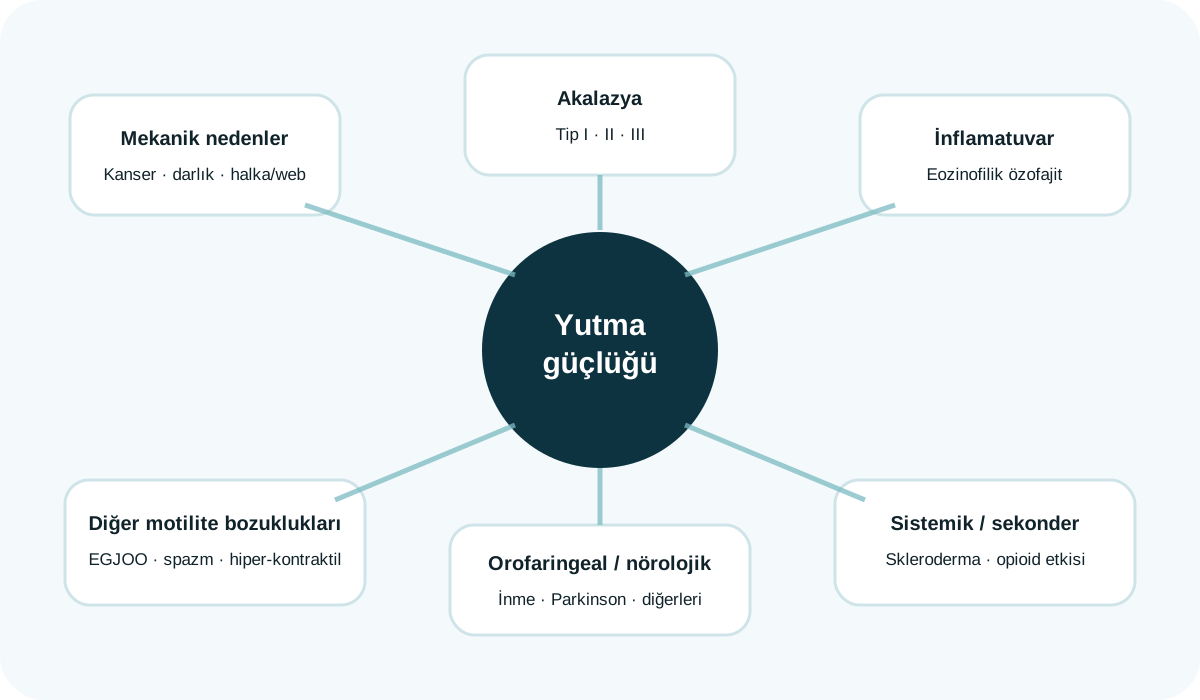
Rapidly progressive dysphagia, marked weight loss or new symptoms at an older age require particular attention to mechanical obstruction and pseudoachalasia.
Pseudoachalasia and cancer at the gastro-oesophageal junction
Malignancy near the distal oesophagus or gastric cardia can mimic achalasia. Rapid progression, marked weight loss or new dysphagia at an older age should increase attention to mechanical causes.
EGJ outflow obstruction (EGJOO)
HRM may show outflow resistance without fulfilling complete criteria for achalasia. Chicago v4.0 requires a tighter combination of manometric findings, relevant symptoms and supportive testing for clinically relevant EGJOO.
Distal oesophageal spasm and hypercontractile oesophagus
Chest pain and dysphagia may arise from spastic motility disorders. Their HRM patterns differ from Type III achalasia, especially in EGJ relaxation and preserved peristaltic activity.
Eosinophilic oesophagitis
Intermittent solid-food dysphagia or food impaction, especially with allergic disease, can suggest EoE. Diagnosis requires endoscopy with appropriate oesophageal biopsies.
Strictures, rings, webs and other mechanical causes
Peptic strictures, Schatzki rings and other structural narrowing can cause dysphagia and are assessed with endoscopy and/or contrast studies.
Oropharyngeal and neurological dysphagia
Difficulty initiating a swallow, coughing during swallowing or aspiration may originate above the oesophagus and require a different pathway.
Sistemik hastalıklar ve sekonder motilite bozuklukları
Sistemik skleroz gibi bağ dokusu hastalıkları özofagus hareketini etkileyebilir. Opioid kullanımı da bazı spastik manometri paternleriyle ilişkili olabilir. Bu nedenle ilaçlar ve sistemik hastalık öyküsü değerlendirme sürecinin parçasıdır.